|
Seasonal Forecasts of Antarctic Sea Ice Variation
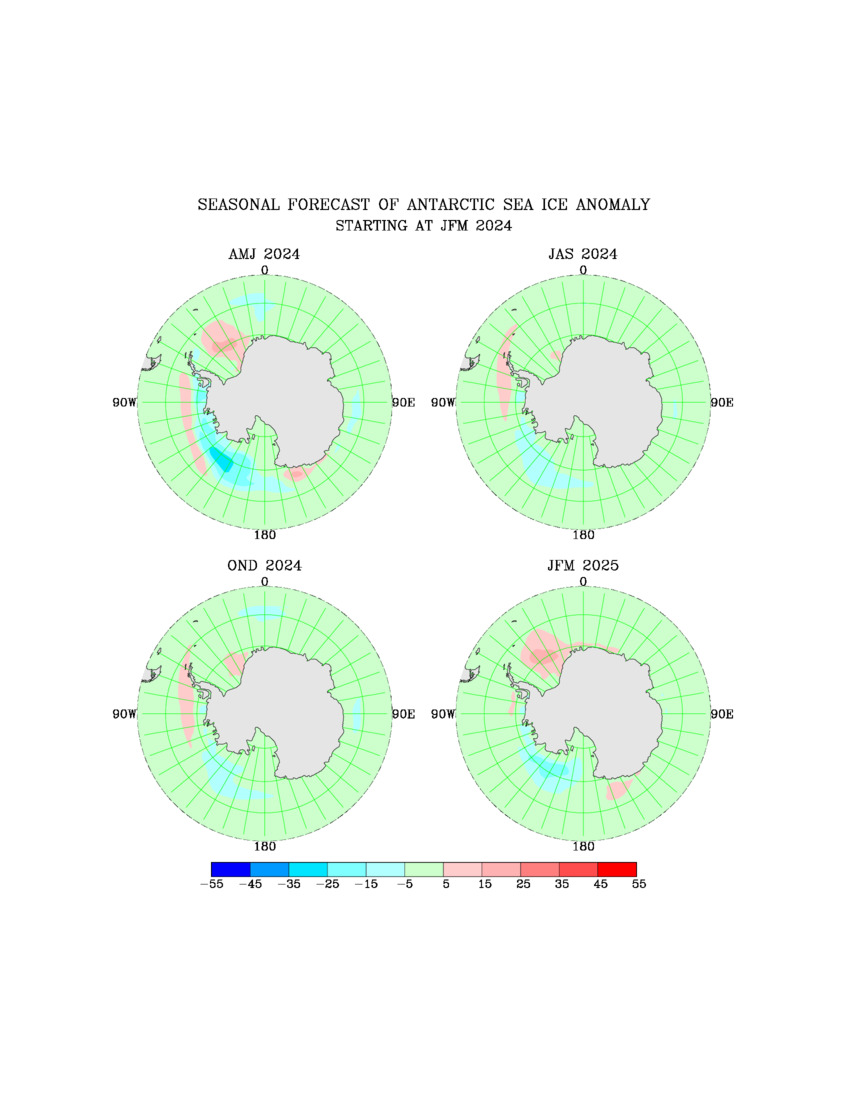
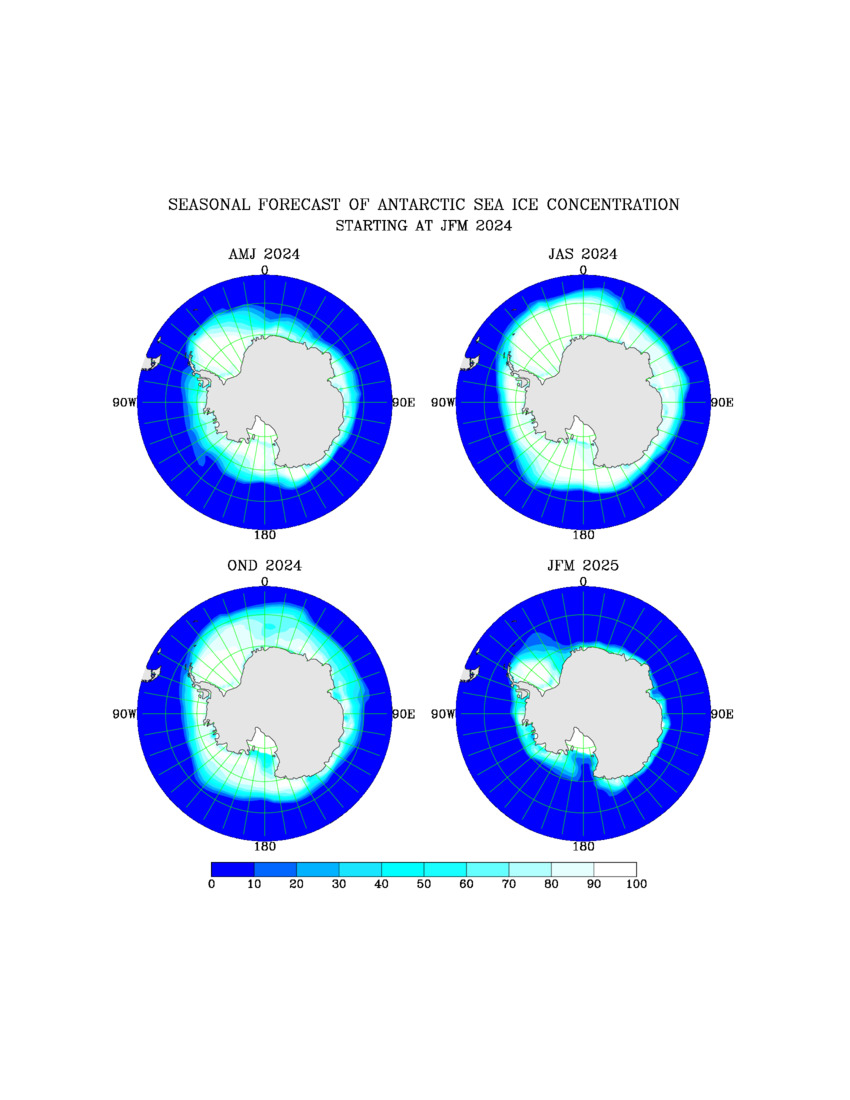
Dake Chen, Xiaojun Yuan and Cuihua Li For those who only care about results, click on figures to view the latest forecasts of our Markov model:
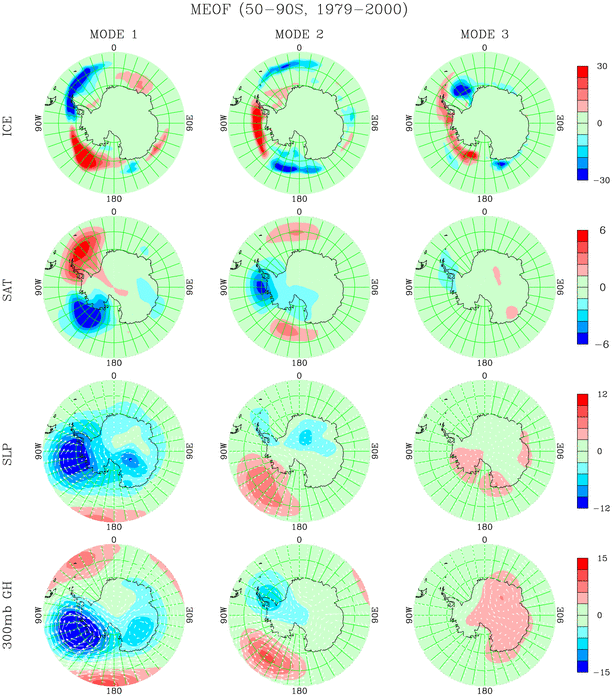
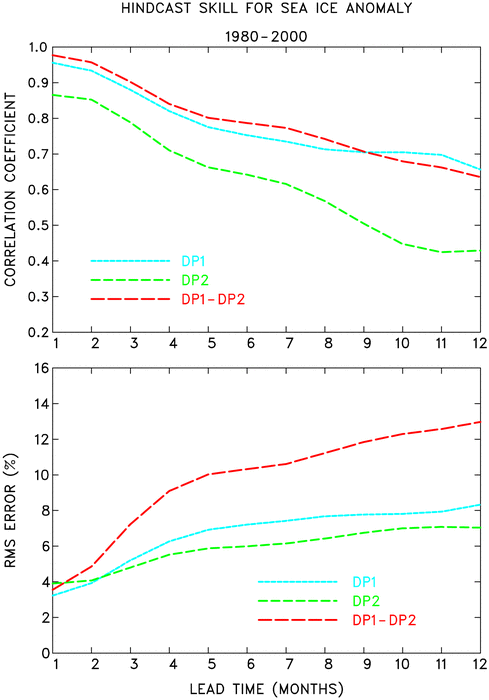
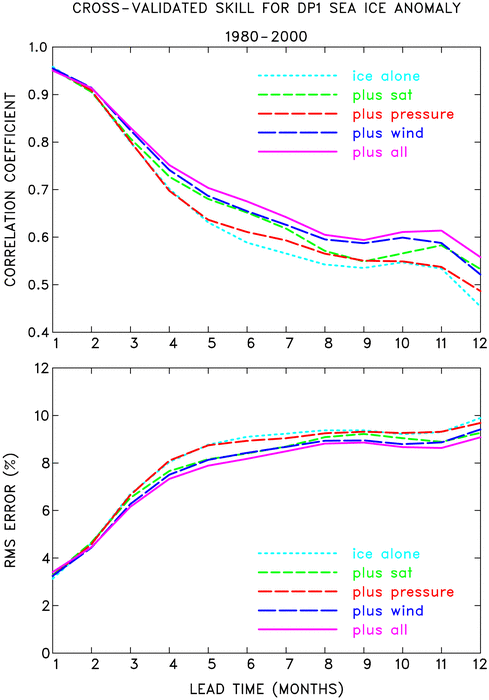
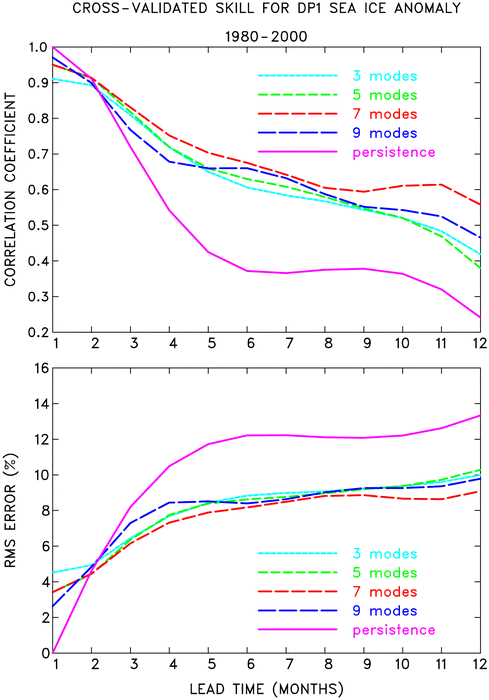
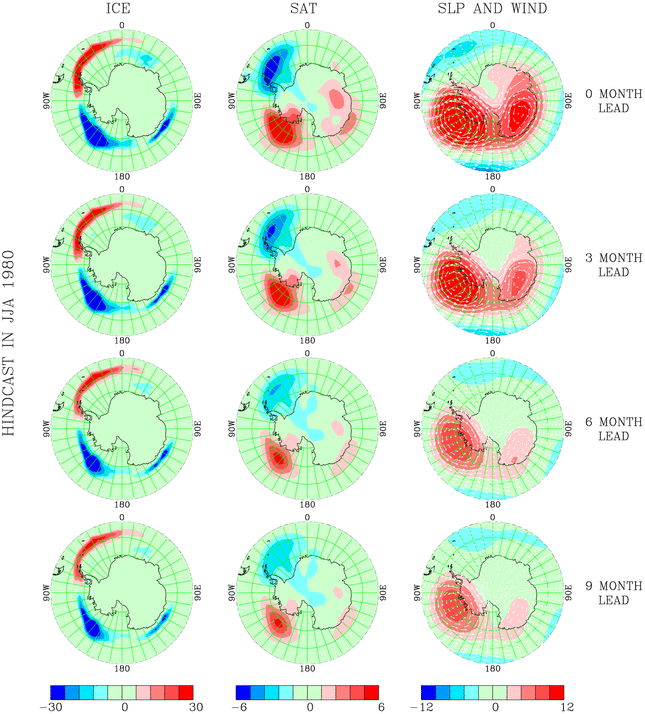
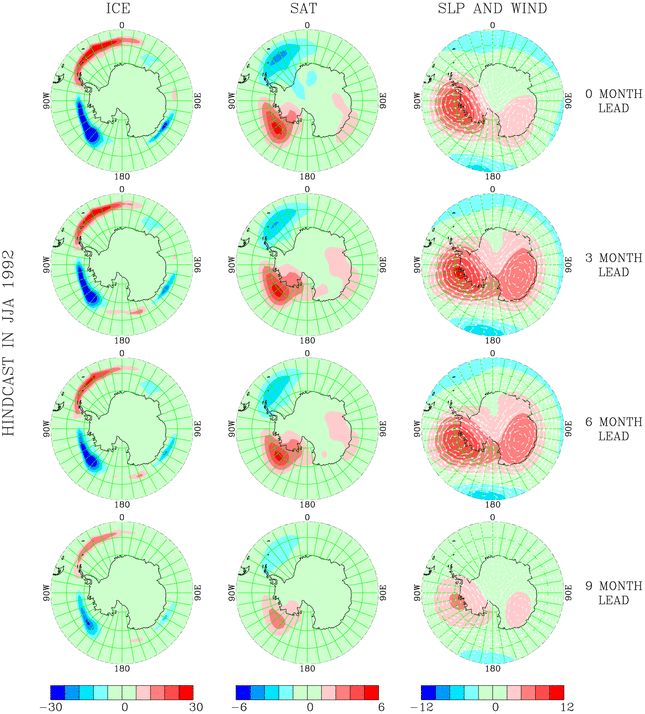
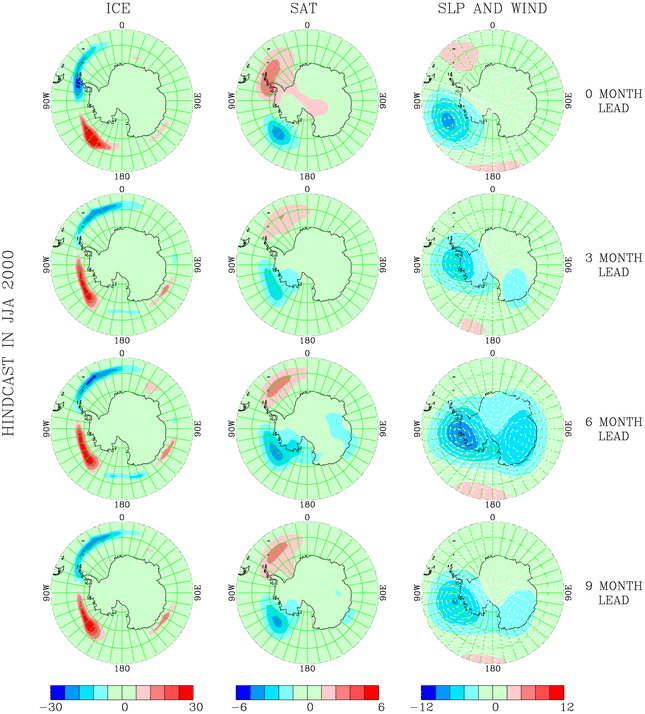
otherwise, read on. Forecasts of Antarctic sea ice variation are very much in demand, not only because of the potential importance of sea ice in global climate, but also for the practical purpose of exploring the Antarctic continent. However, such forecasts are not presently feasible with any state-of-the-art GCMs, since the complex ice-air-sea interaction processes are still not well understood and by no means well simulated by these models. The alternative is then to apply statistical methods to Antarctic sea ice prediction. The linear Markov model described here represents one of the first attempts in this previously untravelled territory. Our model was built in the space of multivariate empirical orthogonal functions (MEOFs). Sea ice, surface air temperature, sea level pressure, surface winds, 300mb geopotential hight and the winds at that hight were chosen to define the state of the Antarctic climate. The MEOFs of these variables were calculated based on 22 years (1979-2000) of observational and reanalysis data, and the principal components (PCs) of the leading modes were used to train the season-dependent transition matrices of the Markov model. Once these were obtained, the evolution of the climate state from one month to the next was determined. In practice, the initial PCs are found by projecting observations to the MEOFs. The model's hindcast scores are pretty high, especially in winter and in the Antarctic dipole regions. A comparison of skill in DP1 (W130-150, S60-70) and DP2 (W20-40, S55-65) regions indicates that the skill is higher in the Pacific than in the Atlantic. The model skill was also evaluated in a cross-validated fashion, and a great deal of experiments were performed to check the sensitivity of the skill to the variables included, to the number of MEOFs retained, and to the region of atmospheric data coverage. Although the cross-validated skill is lower as expected, it still beats persistence by a large amount. It appears that our best choice for now is to use all these variables together, retain 7 MEOF modes, and build the model for the polar region (S50-90). The model's good overall skill mostly derives from its ability to pick up the dipole pattern (the first MEOF mode), as evident in the hindcasts of the summer conditions in 1980, 1992, and 2000. At present, we provide experimental forecasts of Antarctic sea ice every month for up to four seasons into the future. These are ensemble averages of the forecasts initialized with the last three months of available observational data. Both anomalous and total sea ice concentration are included.
Chen, D., and X. Yuan, A Markov model for seasonal forecast of
Antarctic sea ice. J. Clim., 17, 3156-3168, 2004. dchen@ldeo.columbia.edu, xyuan@ldeo.columbia.edu, cli@ldeo.columbia.edu |