| SEA DENDRO PAGE | CULTURALLY MODIFIED TREES |
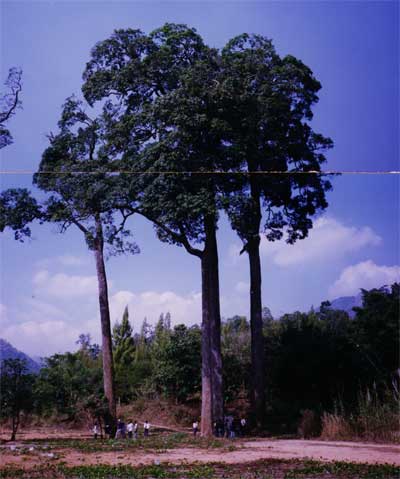
Similar to the depletion of the teak resource throughout the region, Thailand's pine resource is dwindling under mounting pressures of development and logging, both legal and illegal. The additional impact of gouging and burning by northern Hilltribes has not been properly assessed. The objectives of the CMT project seek to answer several key questions regarding these activities, with a special view toward sound future policy.
1.) What are the physical impacts on growth of Pinus kesiya and P. merkusii?
2.) What is the cultural and/or economic significance of gouging and burning to local Hilltribes?
3.) From a policy standpoint, what is an "allowable" amount of damage per unit area of stem, and what percentage of stems within a stand, if any, should be made available for this activity?
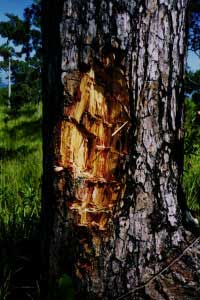
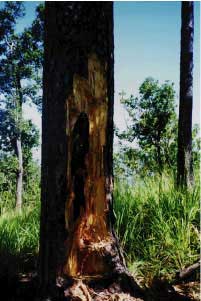
Research methods by Tongjit and Buckley are being tested in the relatively controlled environs of the Queen Sirikit Botanic Garden, and at nearby Doi Inthanon National Park. An economic index of the monetary value per unit area of removed stem material, versus a biotic index of assessed physical damage is being developed that will assist policy makers in deciding the best course of action in the future. As noted during field studies in several locations, both pine species seem to be able to tolerate surprisingly extensive damage. Mortality in most noted occurrences seemed to result more from structural failure of the stem where trees have toppled. To what degree the inflicted damage is largely aesthetic is an important aim of the study.
| SEA DENDRO PAGE | TRL HOMEPAGE | LAMONT HOMEPAGE |