SOUNDS OF SEISMOLOGY:
The earthquake source
When we zoom in on the San Andreas Fault in California, we can see that these boundaries
are defined on the surface by networks of faults that extend, oh, about 10-20 km deep
into the crust, and then give way to more ductile faults and shear zones.
Much research is focused on the nature of these transitions and how they interact in
space and time.
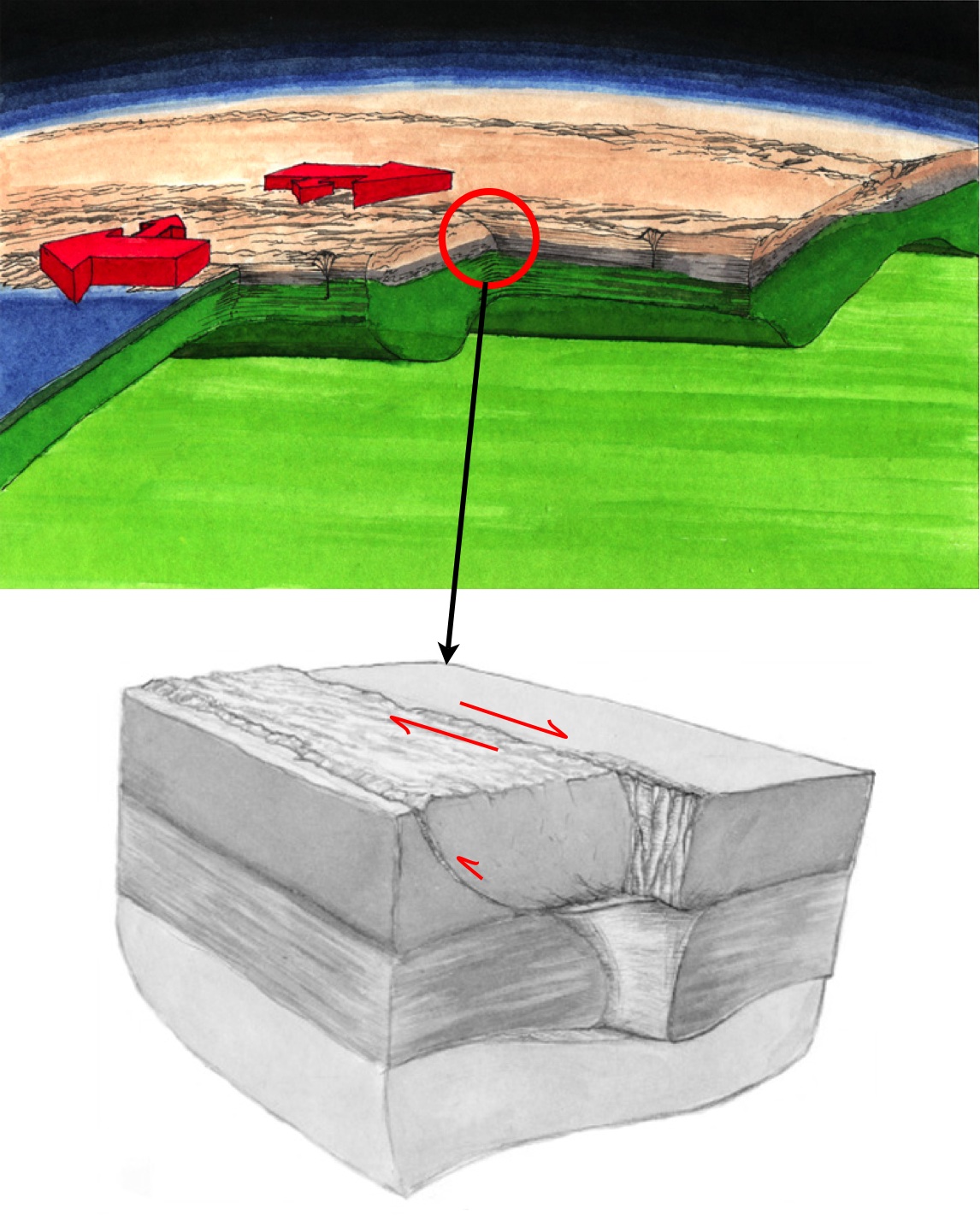
The earthquake is the release of energy stored in the plate as the plates move past each other
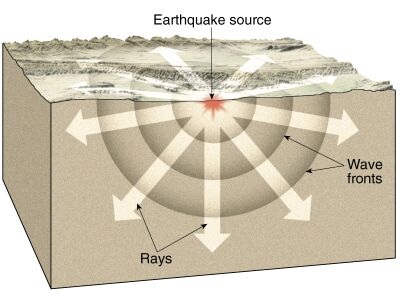
far from the fault, but the fault surface is locked. When the fault suddenly gives way and
the plates lurch past each other, a great deal of energy is released on that rupture surface,
as illustrated here. (source of image unknown)
You can get a feel for this process by locking your fingertips and trying to flick your fingers
without letting them go. The harder you push with one hand and resist with the other,
the more you feel tension in your forearms building. This is stored energy, and when your
fingertips finally yield, the flick is the release of that energy, analogous to the earthquake.
GO