THREE: WHAT IS MAGNITUDE ?
IIIc. MAGNITUDE
The Richter scale is one of several measures of the size or
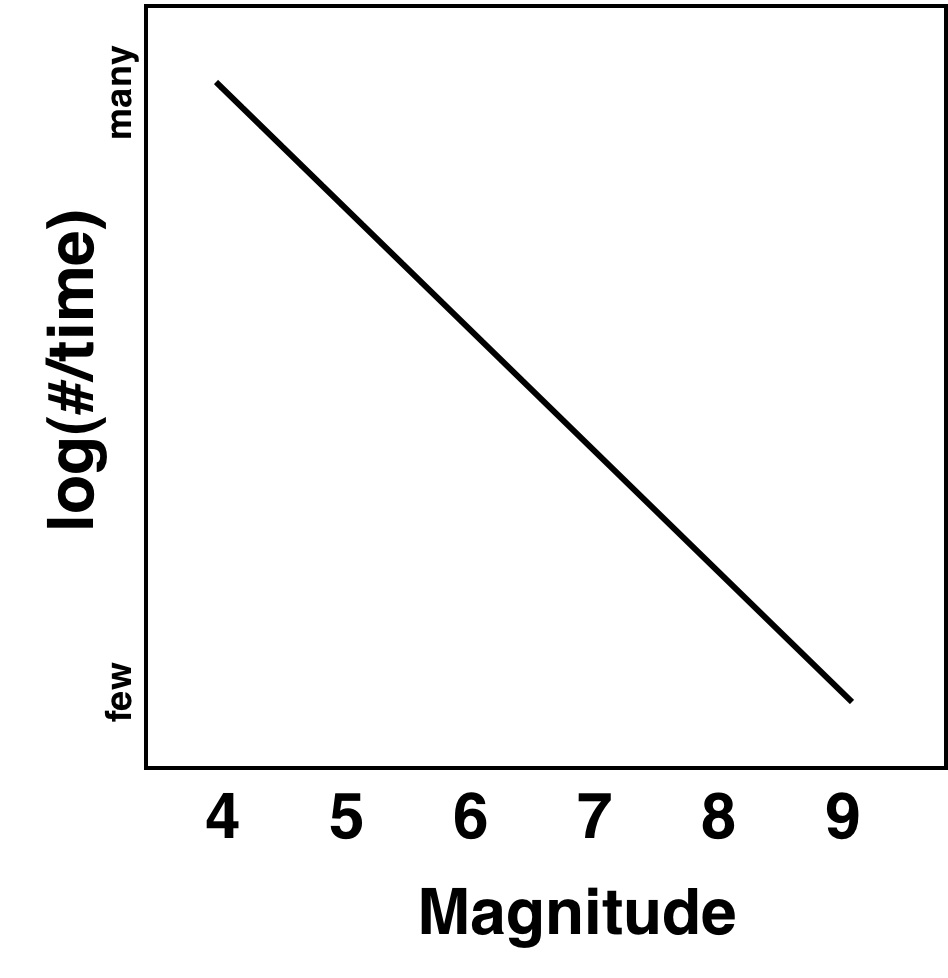
"magnitude" of an earthquake. Earthquakes have a property
(common to many natural processes) that there are many small
ones and few large ones, referred to as the Gutenberg-Richter Law.
Although "magnitude" is related to the amplitude (height) of a wave,
we cannot communicate the concept of magnitude using sound by changing
the volume of the sound, in part because our speakers do not
have much dynamic range. So instead of volume, we explain the
meaning of magnitude by the duration that the Earth is shaking
after an earthquake. We use several earthquakes from the region of Sumatra
to illustrate these differences.
Sumatra earthquakes
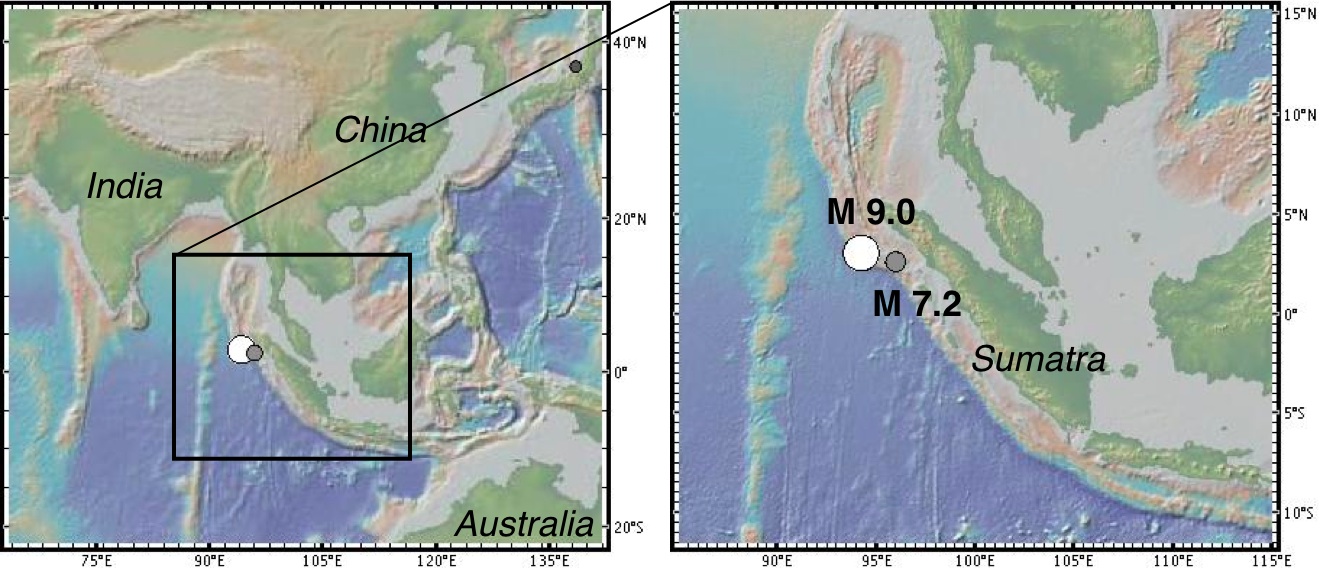
Northern Sumatra, Mw 7.2, 2002/11/2 1:26 GMT
with Mw 5 aftershock
12 hrs at 20 sps
40 k